The International Rehabilitation Education and Training Toolkit (IRETT) has proven to be a crucial resource in bridging the gaps in education, regulation and clinical practice in Uganda, and its potential for broader application across low-resource settings was recently showcased at the World Physiotherapy Africa Region Congress 2024.
The World Physiotherapy Africa Region Congress 2024, held 12–15 September in Cape Town, South Africa, brought together physiotherapy professionals from across the continent to exchange ideas and innovations. Organised by the South African Society of Physiotherapy (SASP), the event also celebrated 100 years of physiotherapy in South Africa. Participants discussed various topics related to rehabilitation, health promotion and strategies for advancing physiotherapy in the African context.
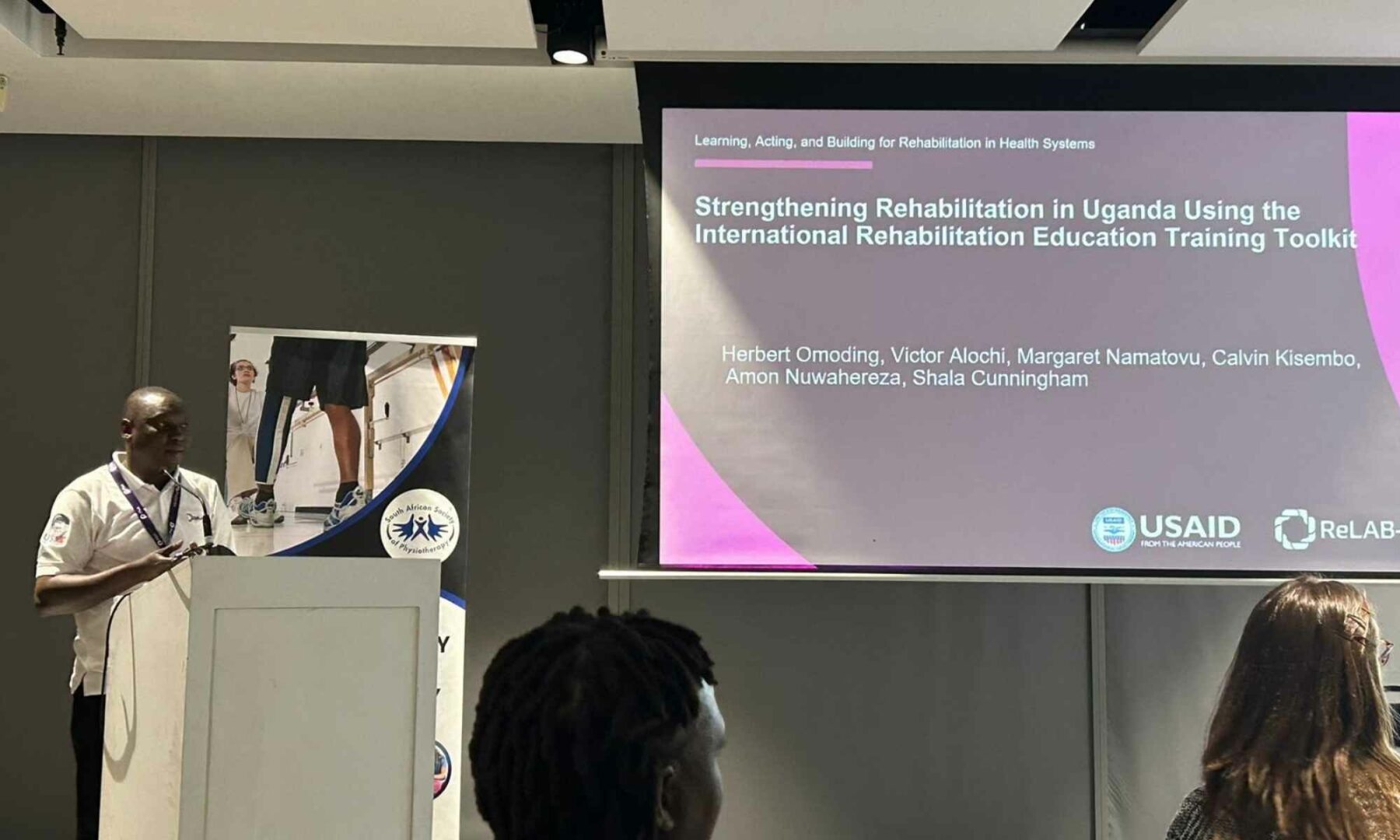
Rehabilitation professionals from Uganda, supported by the USAID-funded ReLAB-HS project, attended the congress to present the successful outcomes of workforce development activities in their country. The Ugandan team, consisting of Herbert Omoding, Margaret Namatovu, Calvin Kisembo and Amon Nuwahereza, highlighted the success of using the IRETT — a comprehensive set of resources designed to enhance education, training and regulatory frameworks to build rehabilitation capacity and improve care quality. The toolkit includes practical tools such as the Academic Program Reflection Tool (APRT), the Professionalization and Regulation Reflection Tool (PRRT) and the Clinical Skills Training Tool (CSTT).
The team shared real-world examples of implementing the IRETT in various professional settings, including physiotherapy, occupational therapy, speech and language therapy and orthopaedic technology.
Calvin Kisembo opened the presentations by detailing how the PRRT was employed to assist Uganda’s rehabilitation professional associations in meeting both international standards and local needs, while also fostering interprofessional collaboration. He described how this tool advanced education standards and supported the development of a Scope of Practice and Code of Ethics for Occupational Therapists in Uganda.
Next, Margaret Namatovu presented on the APRT, emphasising its role in developing entry-level programmes that meet international standards while addressing local rehabilitation needs. She demonstrated how the APRT could be used to identify areas for curriculum enhancement, with the potential to improve rehabilitation education globally.
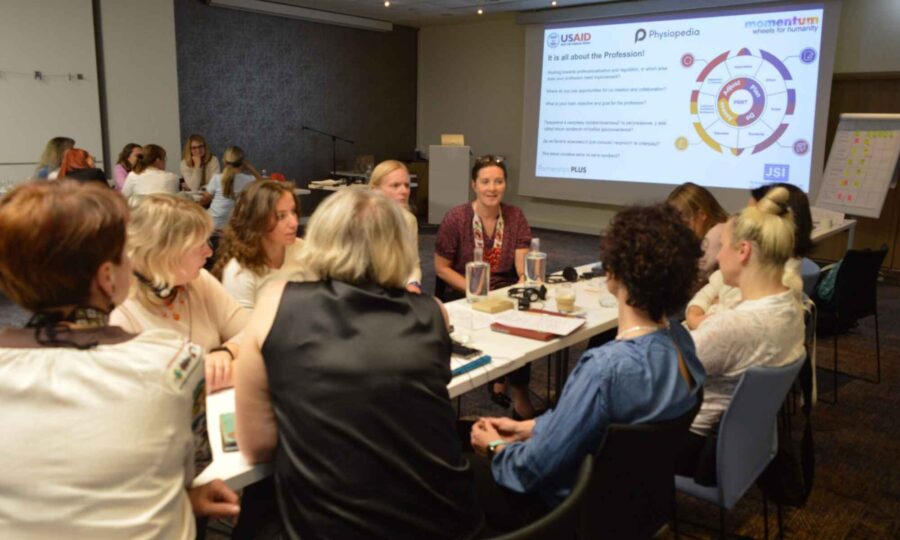
Amon Nuwahereza then explained how professional associations in Uganda have enhanced continuing professional development (CPD) through collaborative clinical rehabilitation skills training. This innovative interprofessional training model includes structured online learning via Physiopedia Plus, followed by hands-on practical sessions with both local and international mentors. Ongoing online discussions through the Rehabilitation Community further facilitated knowledge-sharing across professions, offering a promising approach that could be adapted to meet CPD requirements in various contexts.
Concluding the session, Herbert Omoding, Physiopedia’s Education Focal Point for the ReLAB-HS activity in Uganda, summarised how these efforts are interlinked through the IRETT. He explained that the toolkit’s tools are tailored to improve education and professional development for rehabilitation professionals, particularly in resource-limited settings. The focus remains on strengthening academic programmes, enhancing regulatory standards and improving clinical skills training.
The audience responded positively to the presentations, especially noting the strong collaboration between professions demonstrated through the ReLAB-HS activities.
The value of IRETT tools in addressing the challenges of education, regulation and clinical practice, especially in resource-poor settings, was recognised. Attendees noted that this cooperative model, involving multiple professional associations, should be adopted by other countries to optimise resources and amplify the collective impact of the rehabilitation professions.