During late April, the Physiopedia team embarked on a journey to Guadalajara, Mexico, for the International Society of Prosthetics and Orthotics (ISPO) World Congress. This event provided a valuable platform not only to showcase some pivotal initiatives under the ReLAB-HS umbrella but also to underscore the significance of interprofessional cooperation in strengthening the global rehabilitation workforce.
The World Health Organization’s Rehabilitation 2030 Initiative acknowledges the pressing need to strengthen and integrate rehabilitation into healthcare systems worldwide. A cohesive and robust rehabilitation workforce holds the potential to address the escalating demand for rehabilitation services, thereby enhancing patient access and the quality of care, especially in low and middle-income countries. Effective interdisciplinary collaboration is a key step in strengthening the rehabilitation workforce and realising this vision.
ReLAB-HS is a direct response to this specific call to action, with Physiopedia at the forefront of developing tools aimed at strengthening the rehabilitation workforce through an interdisciplinary perspective. The culmination of these efforts has given birth to the International Rehabilitation and Education Toolkit (IRETT).
The IRETT is a collection of courses and resources adaptable to educational or training programmes around the world. These tools focus on four key areas identified in the rehabilitation professions (physiotherapy, occupational therapy, speech and language pathology, prosthetics and orthotics), and identify opportunities for improvement and closer collaboration:
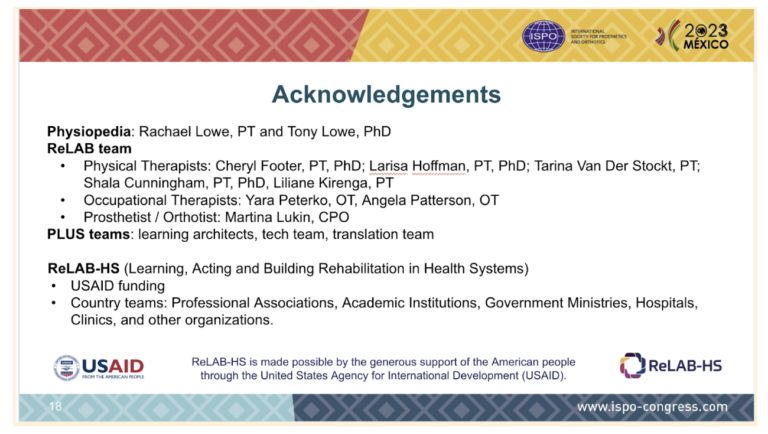
Represented by Angela Patterson (OT), Larisa Hoffmann (PT) and Martina Lukin (PO), our interdisciplinary team attended the ISPO World Congress, held in Guadalajara from 24-27 April. We used the occasion to present the creation of the IRETT tool, in particular its role in strengthening academic capacity, and shared how it is being harnessed in Uganda, Ukraine, Pakistan and Burma, producing positive and lasting impacts on the rehabilitation landscape.

A platform presentation entitled “Identifying opportunities for interprofessional education in rehabilitation: a comparative review of competencies and standards” focused on Interprofessional Education (IPE) and explained how the IRETT could underpin institutional capacity building by encouraging broad pathways for the integration of IPE into the initial training programmes of all rehabilitation professions.
IPE, “when two or more professions learn with, about, and from each other to enable effective collaboration and improve health outcomes”, encounters obstacles such as a shortage of training programmes, limited resources and a shortage of qualified educators. To mitigate these obstacles, IRETT offers a set of ten meticulously selected core online courses to overcome barriers to IPE. These courses serve as interprofessional complements to existing resources, adaptable to any global context.
The development of these core courses involved extensive analysis and mapping, including survey and interview data, along with a review of over 200 documents including standards of practice, competencies, curricula and syllabi. This rigorous mapping of curricula revealed commonalities and disparities within and across professions, pointing to opportunities for IPE and collaboration.
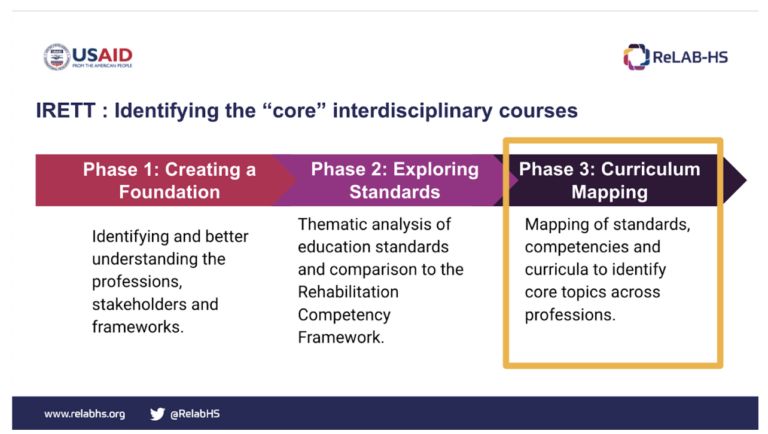
Download the presentation PDF for a detailed overview of the analysis process and the ten core courses that form part of the IRETT.

The Symposium presentation, “Interprofessional rehabilitation education: Developments, opportunities, and benefits for the prosthetics and orthotics profession,” discussed ReLAB-HS initiatives, spotlighting the IRETT’s potential to catalyse IPE opportunities.
The value of IPE and collaborative practice extends far and wide, improving the efficiency of rehabilitation teams, preventing duplication of services, ensuring timely and appropriate patient referrals, and improving continuity of care. In particular, interprofessional collaboration helps recruit and retain healthcare staff, which is especially important in the prosthetics and orthotics sector.
We’ve identified key impediments to IPE and multidisciplinary collaboration, through Physiopedia’s work for ReLAB-HS. The tools integrated in the IRETT are ready to meet these challenges.
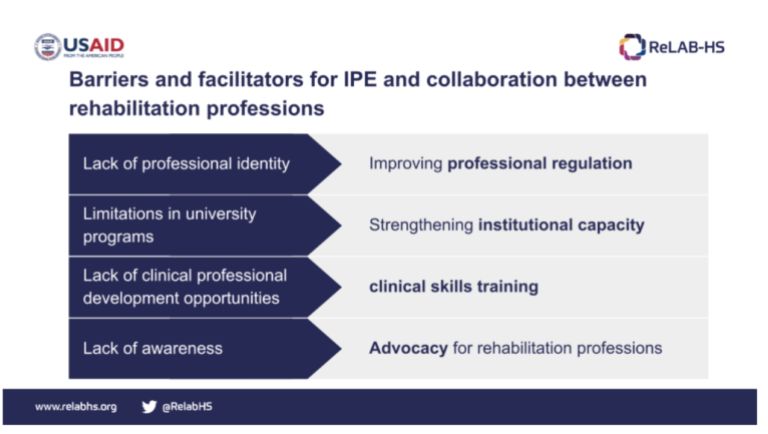
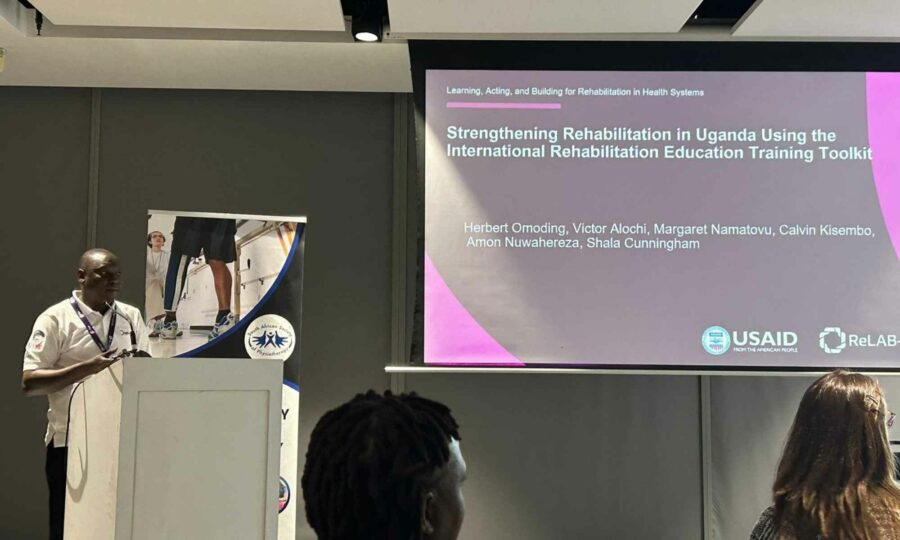
One of the highlights of the symposium was the testimonies of representatives from four countries, who described their experiences of implementing IRETT and the transformative impact on fostering interprofessional collaboration.
In Uganda, Herbert Omoding (PT) shed light on how the IRETT facilitated collaboration among professional association leaders and members, empowering the rehabilitation workforce through streamlined continued professional development (CPD) requirements and enhanced learning opportunities.
In Pakistan, Neelum Zehra (OT) described how the IRETT strengthened institutional capacity, fostering interprofessional collaboration and facilitating cross-border dissemination of CPD resources.
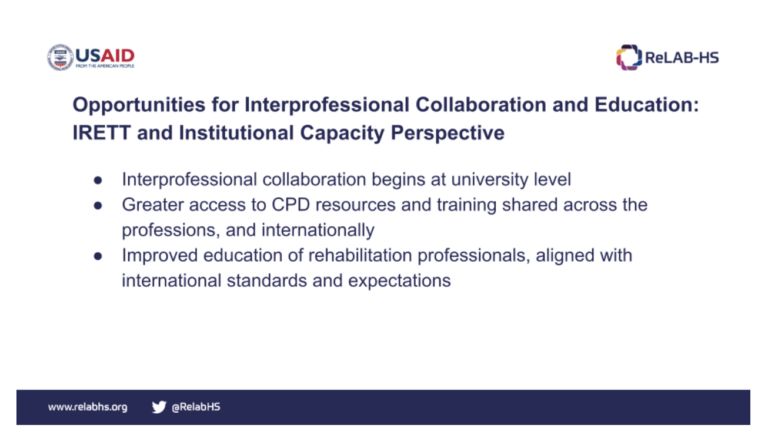
Hsu Wai Mon Oo shared insights from Burma, highlighting the IRETT’s role in enhancing clinical skills training, fostering collaboration, and instilling a culture of lifelong learning.

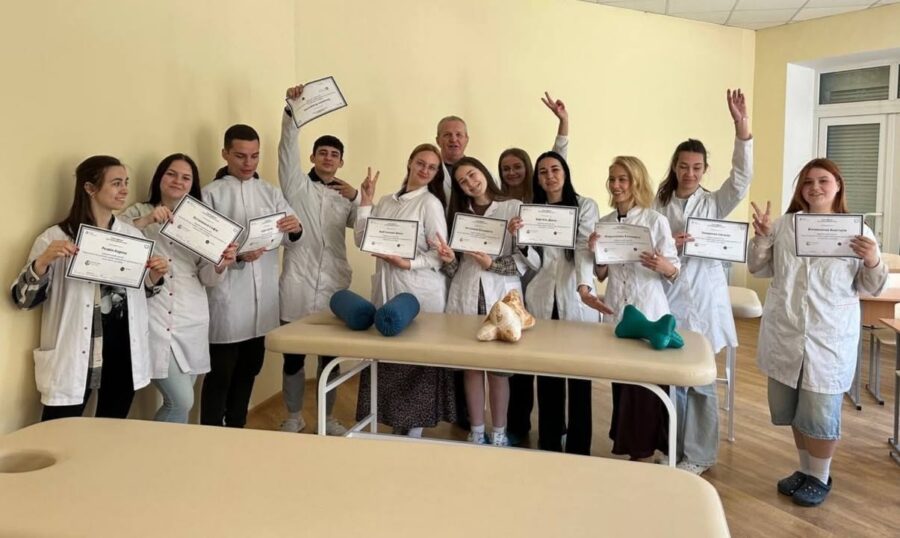
Lastly, Olha Kovalchuk (PhD) from Ukraine illustrated how the IRETT advocacy efforts increased rehabilitation awareness, empowering professionals to influence policy and elevate service quality.
Download the presentation PDF to learn more about how the IRETT is being implemented in these four countries.