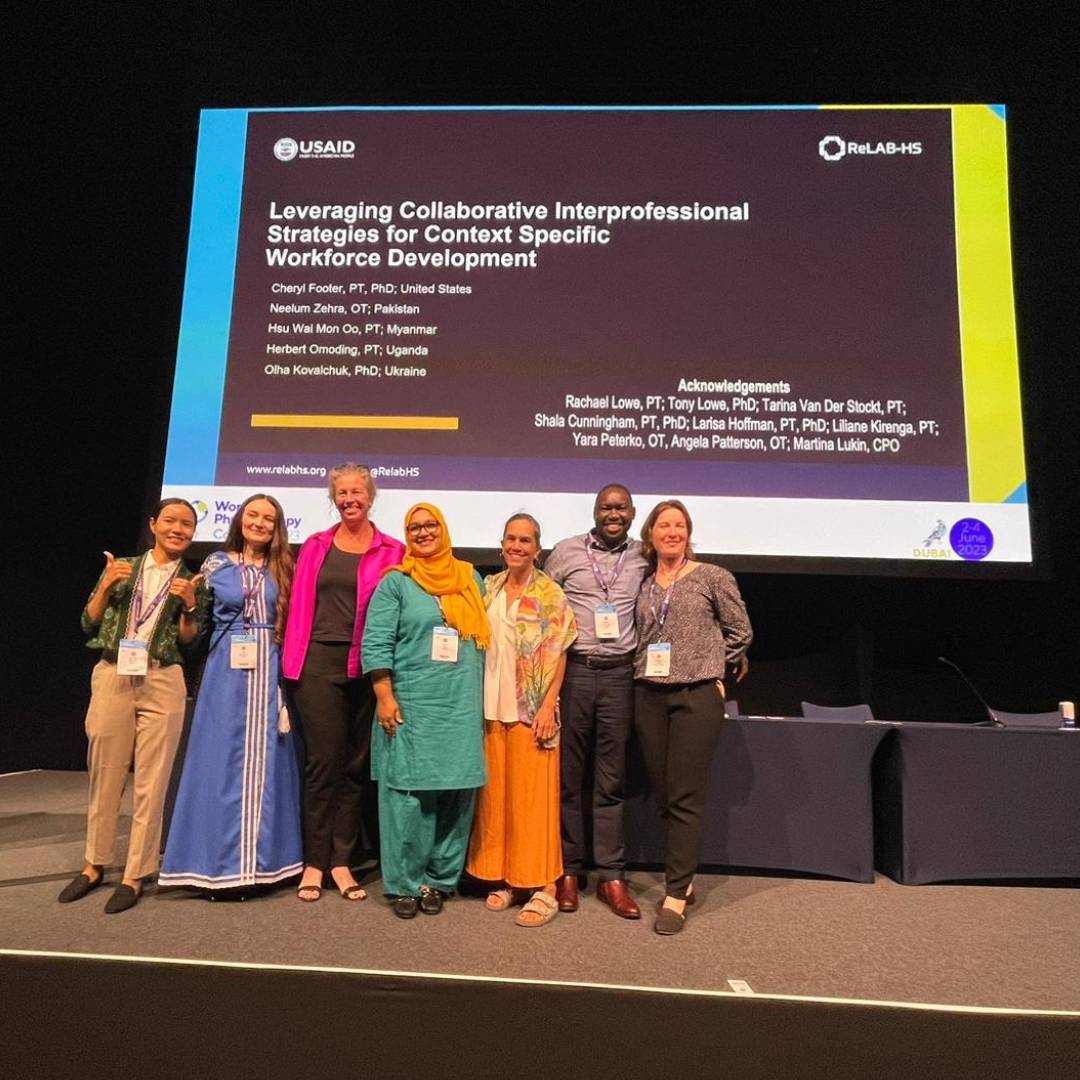
Formative work towards the International Rehabilitation Education and Training Toolkit (IRETT) was recently presented at the World Physiotherapy Congress in Dubai.
The Rehabilitation 2030 initiative has highlighted the urgent requirement to embed and enhance rehabilitation roles within global health systems. However, limitations in pre-service and in-service training opportunities across the rehabilitation sectors significantly hinders the development of a robust workforce, particularly in regions with limited resources. The symposium during the latest World Physiotherapy Congress provided a platform for in-depth discussions on this issue, sharing insights and experiences from various global perspectives.
Cheryl Footer and colleagues shared results from a situational analysis of the current global state of rehabilitation education. The international and interdisciplinary team formulated a framework to understand common rehabilitation workforce challenges. This effort was enriched by survey responses, interviews, and a comprehensive examination of over 200 documents, including practice and educational standards, professional competencies, curriculum designs, and course outlines. This explorative study offered insights into the parallels and distinctions among professions and regions, uncovering pathways for collaborative engagement.
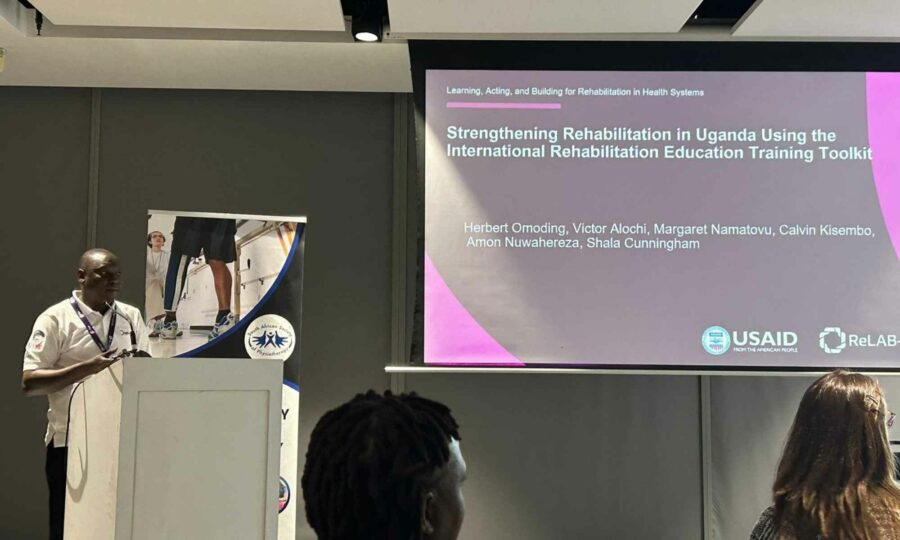
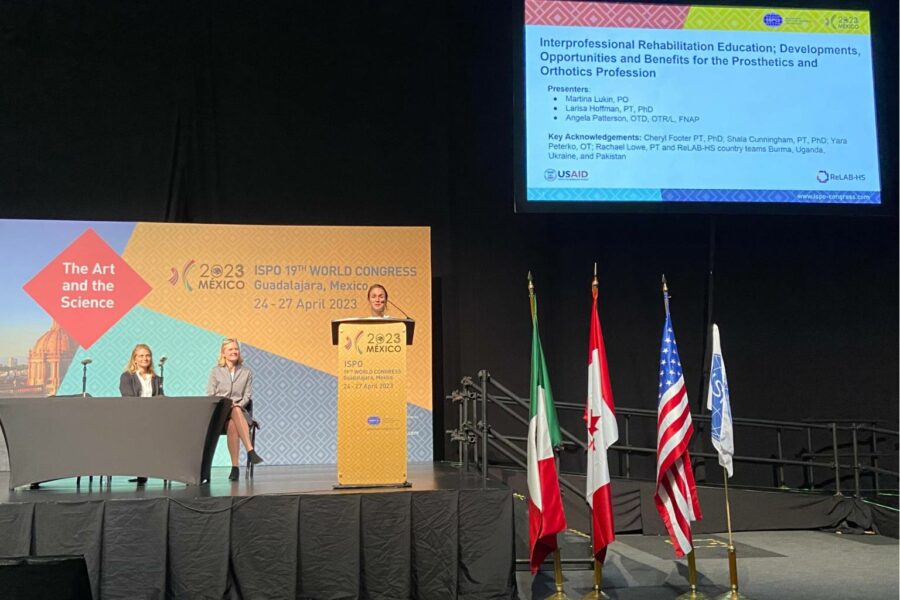
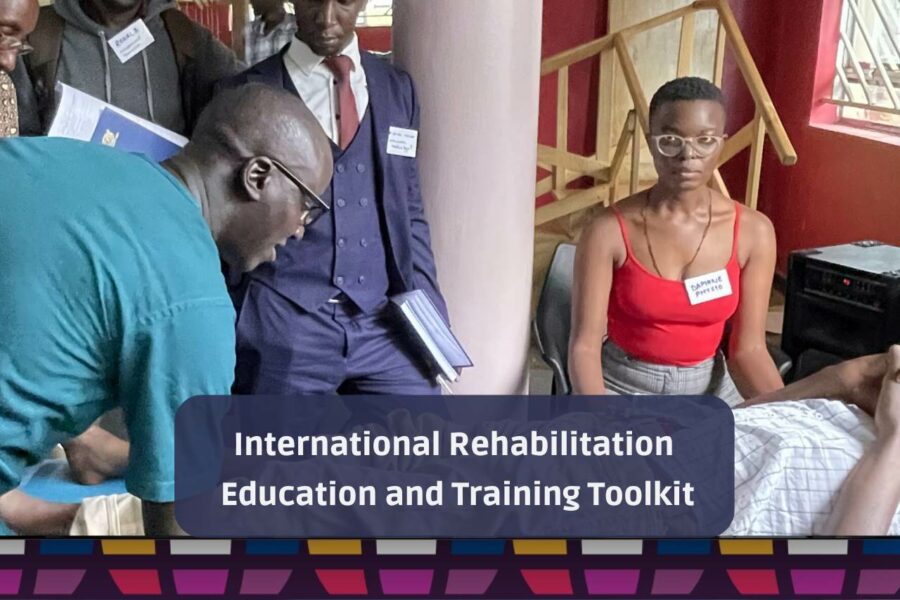
The idea for the IRETT emerged from this work. This toolkit aims to foster interprofessional cooperation and equip organisations with the means to evaluate their national professional regulatory strategies, academic offerings, and clinical training environments. Subsequently, the toolkit found application in four distinct countries: Myanmar, Ukraine, Uganda, and Pakistan. Insights from Neelum Zehra (Occupational Therapist, Pakistan), Olha Kovalchuk (Ministry of Health, Ukraine), Herbert Omoding (Physiotherapist, Uganda), and Hsu Wai Mon Oo (Physiotherapist, Myanmar) on the toolkit’s deployment offered further evidence of the efficacy of interprofessional strategies in reinforcing the rehabilitation workforce.
These research findings combined with the toolkit implementation experiences, underscore the potential of international and interprofessional collaboration to identify best practices for development of the rehabilitation workforce. This collaborative approach lays a robust foundation for the developmnet of tools to support policy development, curriculum design, training opportunities, resource optimisation, and the formulation of locally relevant workforce development strategies that align with international standards of practice and competencies in rehabilitation provision.