At the recent International Society for Prosthetics and Orthotics (ISPO) congress held in Sweden, the Physiopedia team demonstrated how the International Rehabilitation Education and Training Toolkit (IRETT) is tackling the worldwide deficit of skilled rehabilitation professionals. Drawing from extensive research conducted in Myanmar, Uganda, Pakistan and Ukraine, the team presented three specialised tools that illustrate how the IRETT supports local leaders in building workforce capacity and enhancing rehabilitation care within their communities.
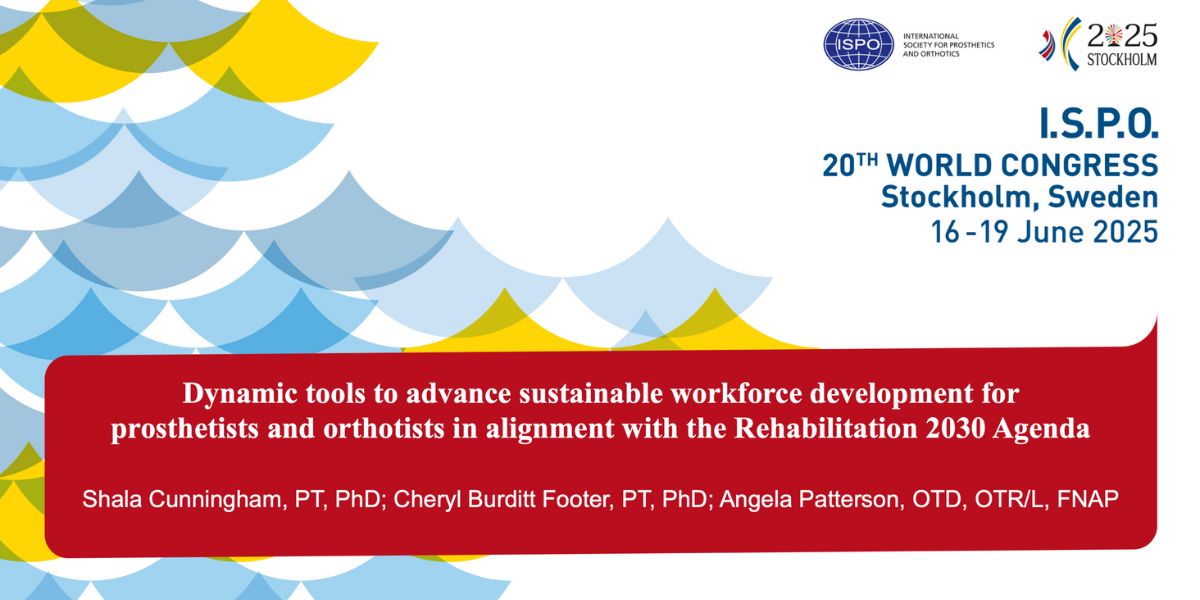
The Physiopedia team, comprising Shala Cunningham, Cheryl Burditt Footer and Angela Patterson, was delighted to participate in the ISPO congress in Sweden last month. Their contribution focused on presenting the IRETT through a compelling session titled “Dynamic Tools to Advance Sustainable Workforce Development for Prosthetists and Orthotists in Alignment with the Rehabilitation 2030 Agenda.”
Statistics paint a bleak picture: approximately 100 million people worldwide are in need of prostheses or orthoses, but 80-90% are unable to access them. This significant unmet demand is largely due to a lack of qualified personnel, especially in low- and middle-income countries. The IRETT was created in response to this pressing challenge, offering a comprehensive set of resources that can be easily incorporated into regional education and training programmes to reinforce staff development, thereby strengthening rehabilitation capacity and improving quality of care. The IRETT was developed based on a comprehensive analysis of more than 400 surveys, along with 100 interviews and workshops conducted in Myanmar, Uganda, Ukraine and Pakistan. This extensive research led to the creation of three specific components: the Academic Programme Reflection Tool (APRT), the Professionalization and Regulatory Reflection Tool (PRRT) and the Clinical Skills Training Tool (CSTT). All three tools are based on a quality improvement methodology enabling local leaders to drive substantial change in their communities. The success of these initiatives depends critically on effective interprofessional collaboration, with prosthetists and orthotists playing a key role within multidisciplinary rehabilitation teams.

During their presentation, the Physiopedia team shared practical insights into these tools, developed to support sustainable rehabilitation workforce development, with hopes that these learnings could be applied more broadly.
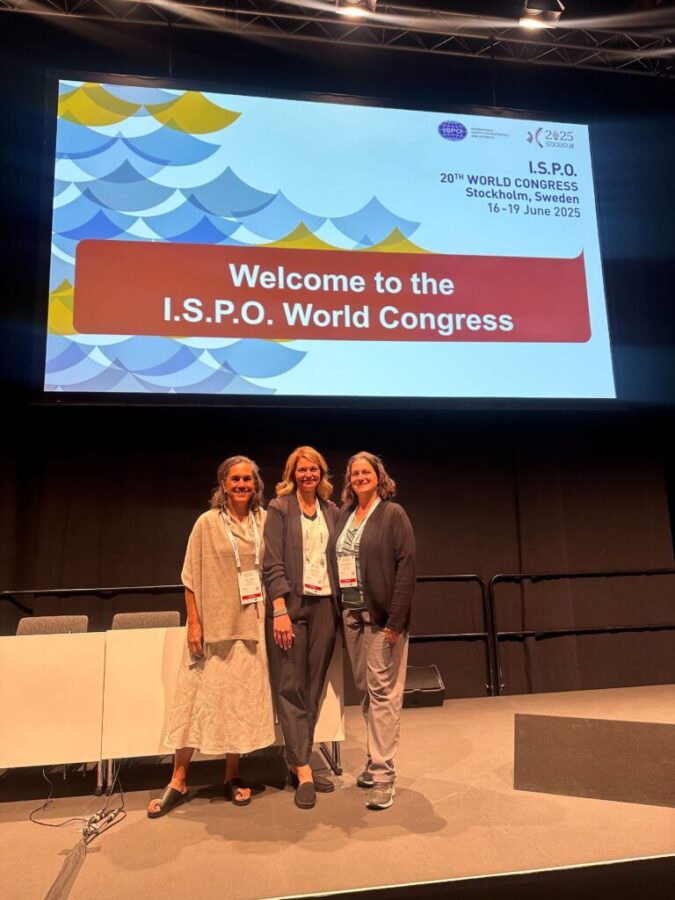
Angela Patterson began by detailing the CSTT – a comprehensive framework that assists in identifying learning requirements, developing training programmes and delivering clinical skills training. This tool enables organisations to provide cost-effective and time-efficient professional development opportunities for rehabilitation professionals. Angela concluded her segment by presenting a case study highlighting the remarkable success of clinical skills training focused on amputee rehabilitation in Uganda.
“I have improved on the assessment of mostly primary amputees which has enabled me to make proper prosthesis for them.”
Shala Cunningham then introduced delegates to the PRRT, which was initially piloted in Pakistan and Uganda. This tool has facilitated the development of professional association documentation, interprofessional codes of ethics and conduct, scope of practice guidelines, practice standards, educational requirements, continuing professional development frameworks, and registration and licensing documentation.
“Key is that we have a unified tool…that we all work by and work with to guide our day-to-day activities.”
Cheryl Burditt Footer concluded the session by presenting the APRT – a structured framework designed to support the evaluation of existing academic programmes or the development of new ones. Through a reflective review process, it identifies opportunities to implement meaningful changes that strengthen rehabilitation academic programmes. She shared compelling real-world implementation case studies demonstrating how the APRT has supported academic programmes across Pakistan, Uganda and Ukraine.
“This has changed my vision for education.”
The complete presentation from ISPO 2025 is available for download, providing comprehensive insights into these innovative tools.
The IRETT demonstrates that with appropriate resources and local ownership, rehabilitation professionals globally can achieve substantial progress towards bridging the accessibility gap in quality care, advancing the collective effort to realise the Rehabilitation 2030 agenda objectives.