As Ukraine’s healthcare system undergoes dynamic evolution amid unprecedented demand for rehabilitation services, a collaborative initiative is transforming how the nation prepares its physiotherapy workforce. This transformation holds vital lessons for rehabilitation organisations worldwide facing the challenge of aligning local education with international standards while addressing urgent community needs.
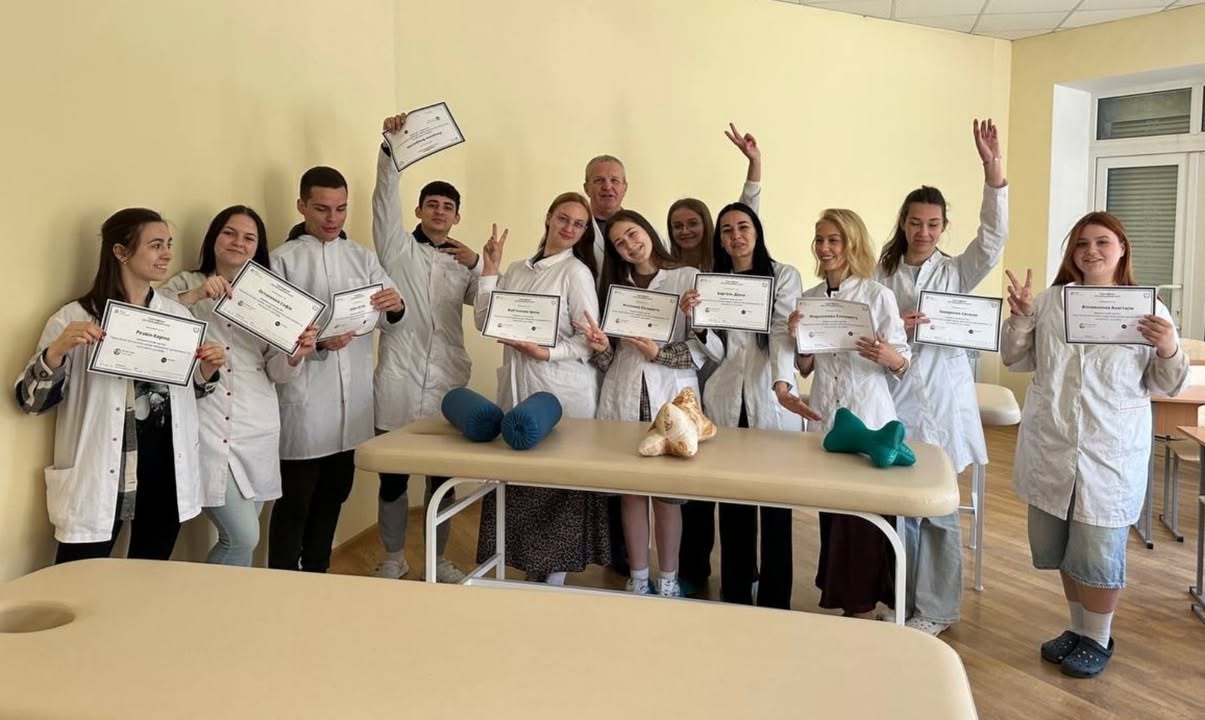
Building on the successful transformation of physiotherapy programmes at four Ukrainian universities, Sumy State University has now joined this collaborative initiative. The Department of Physical Therapy, Occupational Therapy and Sports Medicine is undertaking a comprehensive enhancement of its Master’s programme in Physical Therapy, following the path established by peer institutions across Ukraine. Led by the Physiopedia team with guidance from international mentor Dr. Larisa Hoffman and national coordinator Dr. Olha Kovalchuk, this project demonstrates how the model continues to expand across Ukrainian higher education.
The transformation process centres on the Academic Program Reflection Tool (APRT) from the International Rehabilitation Education and Training Toolkit (IRETT), a practical guide that facilitates systematic programme evaluation and development. Under the leadership of Dr. Yurii Ataman, Head of Department, alongside Dr. Olga Yezhova and Dr. Olga Sytnyk, the team is embedding evidence-based practice, ethics, leadership, and multidisciplinary collaboration into their curriculum.
This initiative builds upon two years of sustained effort across Ukraine’s rehabilitation education sector. Between 2022 and 2024, four universities successfully enhanced their Physical Therapy Master’s programmes to meet international standards. Each institution crafted initial roadmaps for programme enhancement, with many incorporating translated Physiopedia Plus courses into their teaching strategies. These institutions now implement locally-tailored changes while expanding efforts to improve additional programmes at Bachelor’s and PhD levels. The ripple effect continues as educators share knowledge and strategies across institutions.
“Almost two years of close and systematic cooperation with foreign experts allowed us to analyse the educational program for masters in physiotherapy step by step and improve knowledge of modern approaches to using APRT of the IRETT with universities,” reports Ivan Bobersky Lviv State Physical Culture University. “This cooperation gave a significant stimulus to the improvement of the educational program, motivation to develop for the teachers involved in the cooperation, and to continue the development of the specialty at the university.”
The reach has been significant. Supporting webinars have connected with more than 100 teachers from over 30 Ukrainian higher education institutions, focusing on international standards of physiotherapy and occupational therapy at Master’s level. These sessions, featuring simultaneous interpretation, have raised awareness of global practices while offering practical guidance on progressive implementation.
The integration of digital resources has been particularly effective. With over 300 Physiopedia Plus courses now available in Ukrainian, educators can address gaps in teaching capacity while supporting student self-study. This blended approach enables classroom time to focus on practical application and skill development, essential for preparing graduates to address complex rehabilitation needs.
For rehabilitation organisations globally, Ukraine’s experience offers valuable insights. The structured approach using APRT enables institutions to maintain academic rigour while adapting to local contexts and urgent healthcare demands. The emphasis on participatory processes ensures sustainability, as local educators drive change with international support rather than external imposition.
The collaborative nature of this initiative, characterised by ongoing mentorship and knowledge exchange, demonstrates how global partnerships can strengthen local capacity. As rehabilitation needs intensify worldwide, from conflict-related injuries to aging populations, the importance of well-prepared rehabilitation professionals becomes ever more critical.
Sumy State University’s journey, alongside its peer institutions, illustrates that transformation is achievable even in challenging circumstances. Through systematic review, international collaboration, and commitment to excellence, Ukrainian universities are preparing graduates capable of delivering high-quality, evidence-informed rehabilitation services both nationally and internationally.
For institutions considering similar transformations, the Ukrainian experience provides both inspiration and practical guidance. The tools exist, the support networks are established, and the benefits for students, educators, and ultimately patients are clear. As one participant noted, the project provides “boundless opportunities for further growth and improvement of the education of students in Physical Therapy.”
To learn more about implementing similar initiatives using the IRETT tools or to discuss collaborative projects, rehabilitation organisations worldwide are invited to connect with the Physiopedia team. Together, we can continue building bridges that strengthen rehabilitation education and improve outcomes for communities everywhere.