Physiopedia, in collaboration with ReLAB-HS, has recently received attention from Pakistan International News, which highlights the crucial need for investment in rehabilitation education and assistive technology. This recognition highlights the importance of tools such as the International Rehabilitation Education and Training Tools (IRETT) in supporting staff development, increasing rehabilitation capacity and improving quality of care.
At some point in our lives, many of us will need physical rehabilitation. It is estimated that 1 in 3 people in the world – approximately 2.4 billion individuals – live with a health problem that could benefit from rehabilitation. In response, Physiopedia has been an active participant in the Learning, Acting, and Building for Rehabilitation in Health Systems (ReLAB-HS) programme, funded by the United States Agency for International Development (USAID). This programme addresses the growing demand for physical rehabilitation services and assistive technology in low- and middle-income countries, currently focusing on Uganda and Pakistan.
ReLAB-HS activities in Pakistan are conducted at both national and provincial levels, and have included Global Rehabilitation Leadership Institute (GRLI) training in advocacy for rehabilitation and assistive technology. A major focus has been workforce development – an essential component in providing comprehensive, person-centred care. Many regions globally face challenges in supplying a rehabilitation workforce with the right number and mix of professionals to meet population needs, service requirements, and care models. Common issues include a shortage of personnel, inadequate training programmes, lack of regulation, and insufficient awareness of rehabilitation benefits. To tackle these challenges, Physiopedia has developed and implemented a new toolkit.
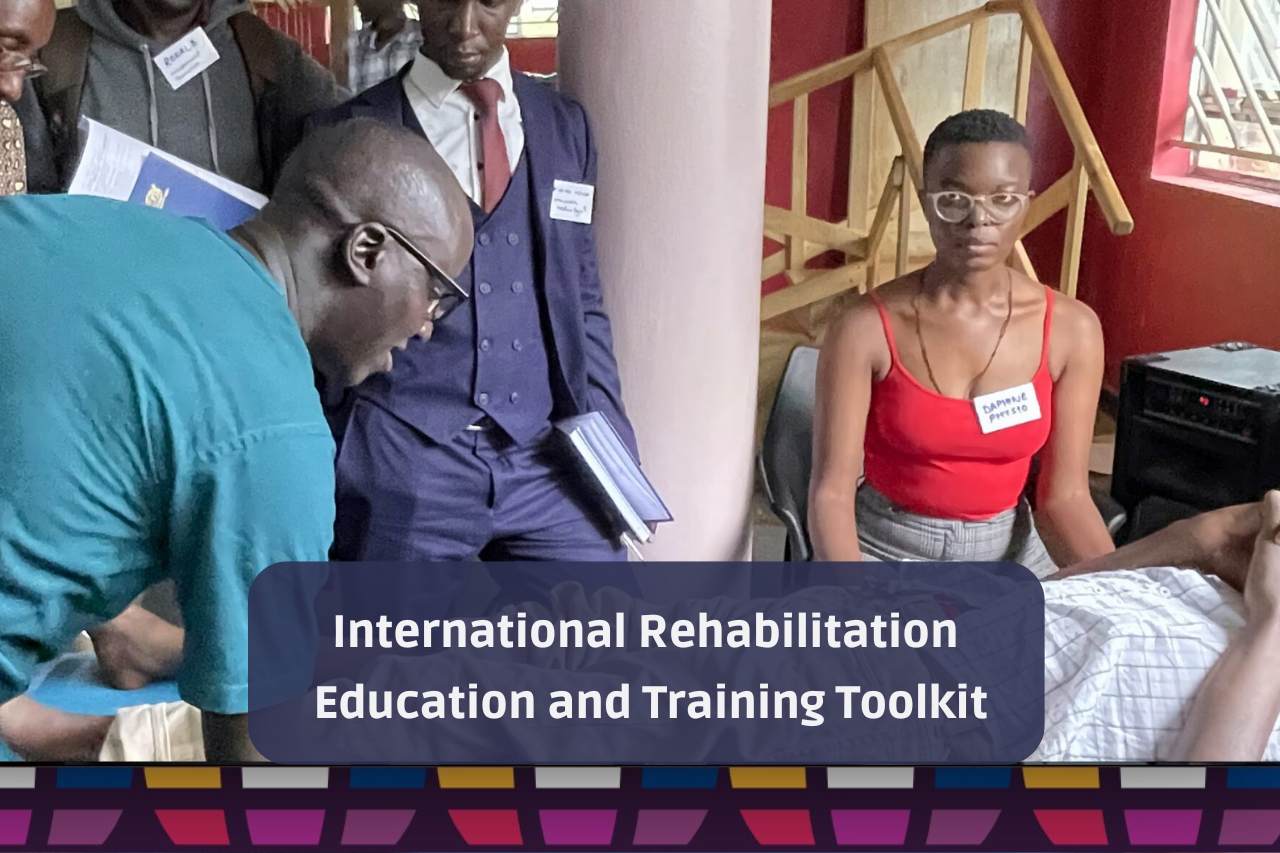
The International Rehabilitation Education and Training Toolkit (IRETT) offers a suite of resources that can be integrated into any region’s educational or training programmes to facilitate workforce development, enhance rehabilitation capacity, and improve care quality. It focuses on four recurring themes when evaluating workforce challenges and provides tools for each, guiding activities related to academic reflection, professionalisation and regulation, clinical skills training, and rehabilitation advocacy.
It’s a high time for local stakeholders to join hands for collaboration and utilise the resources or IRETT for the capacity building of rehabilitation workforce. There is need that through IRETT activity national curriculum is designed keeping the local context in mind. Moreover, it should also provide a component of continuous professional development which involve upgradation of current practicing professional skills to meet the pace of advancement in rehabilitation discipline.
The impact of IRETT, along with other ReLAB-HS activities in Pakistan, was recently acknowledged in a Special Report of the International News.
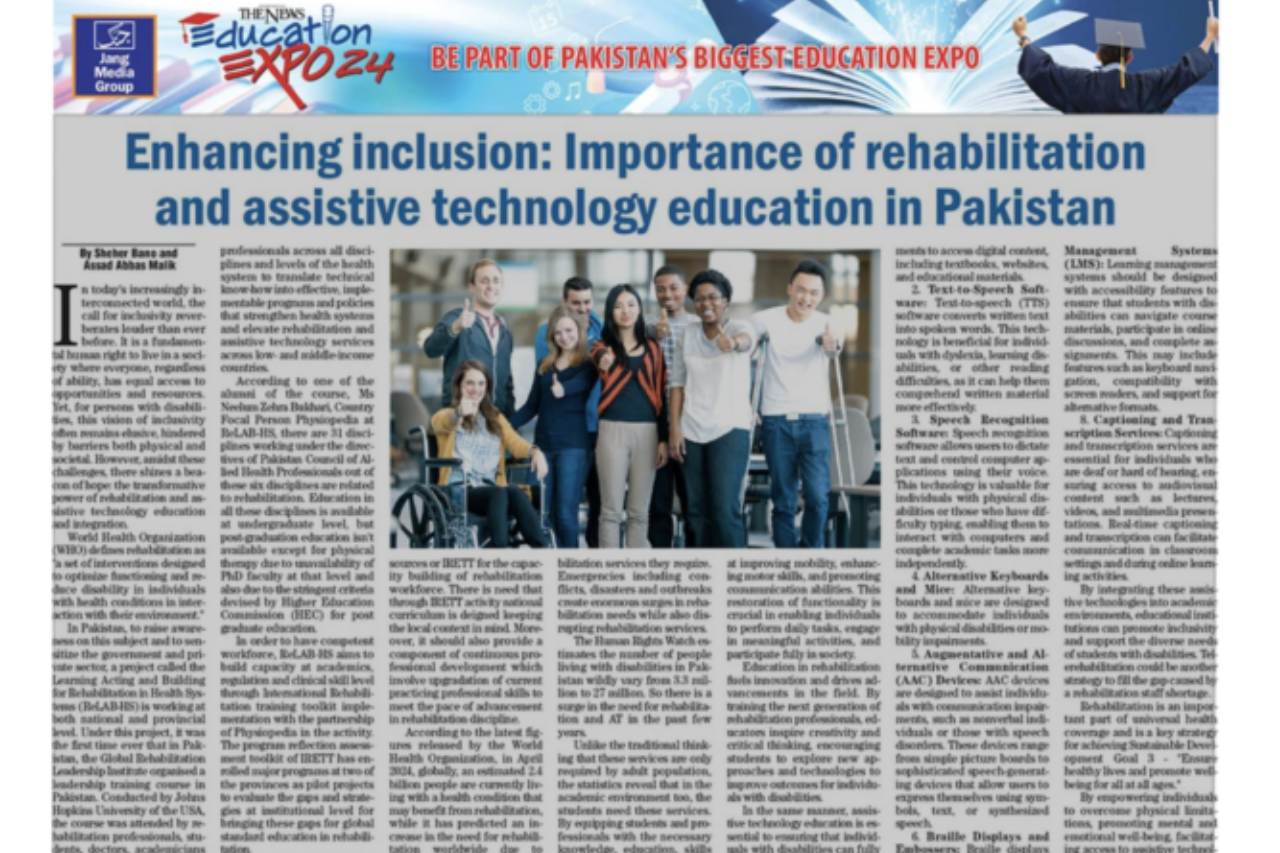
The report emphasises that education in rehabilitation fuels innovation and propels progress in the field. By training the next generation of rehabilitation professionals, educators inspire creativity and critical thinking, encouraging students to explore new approaches and technologies to enhance outcomes for individuals with disabilities.
As we strive towards a more equitable and accessible society, investing in rehabilitation and assistive technology education is not just a moral imperative but a pathway to a brighter and more inclusive future for all.
Read the full article for more details.