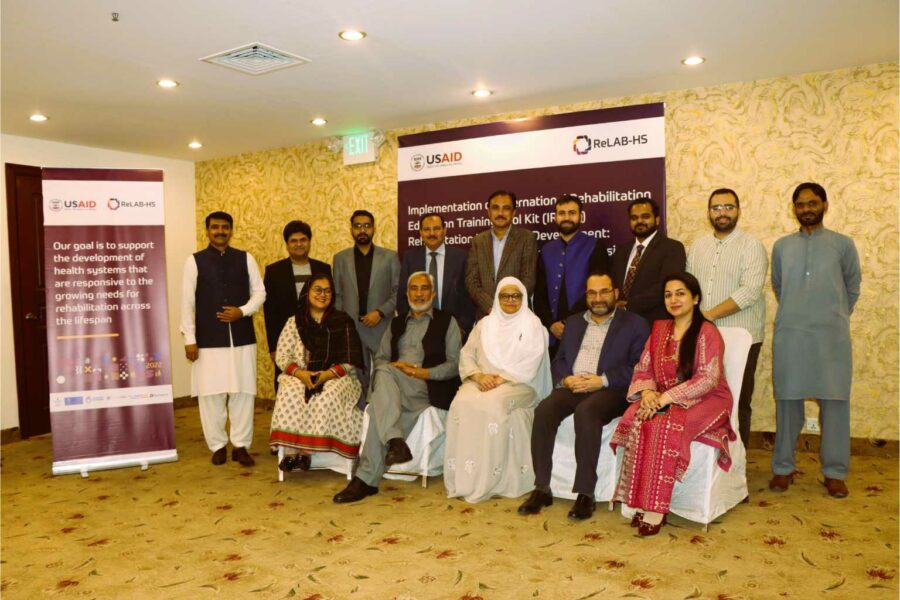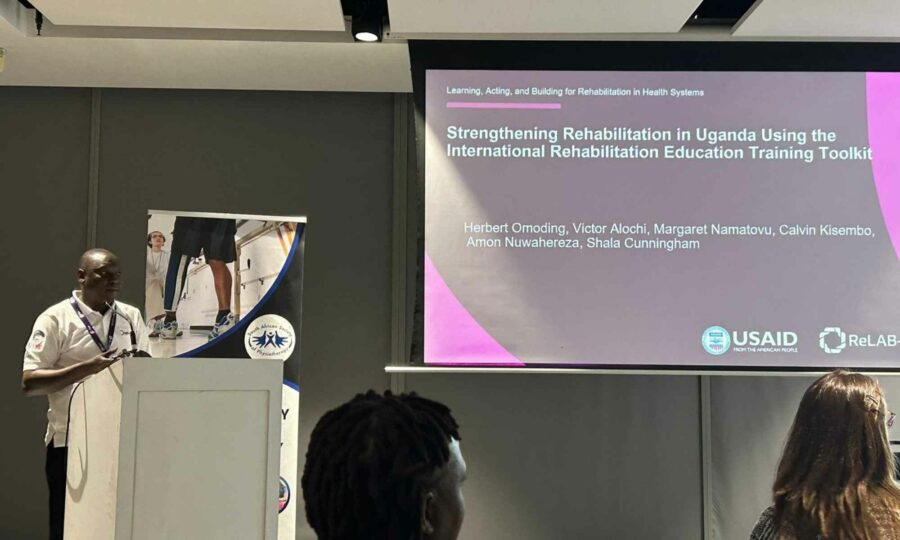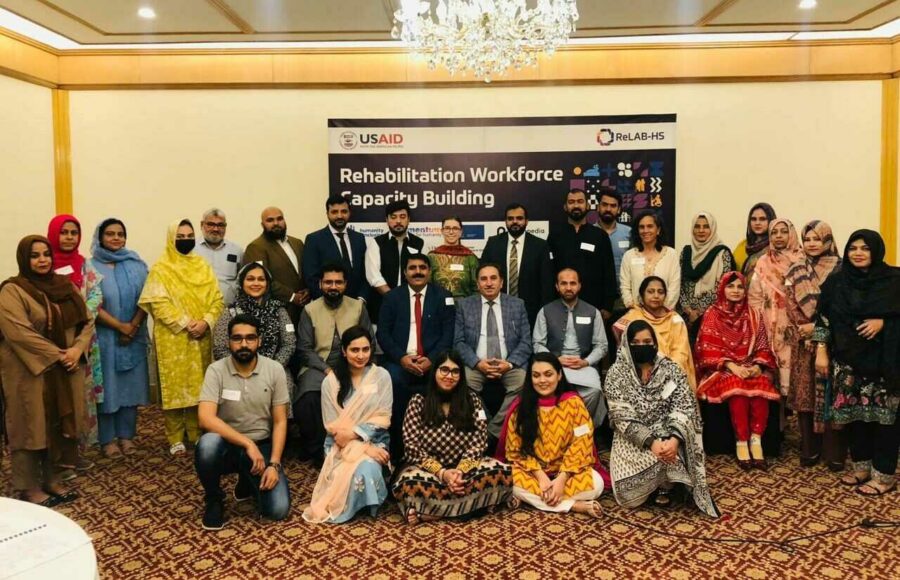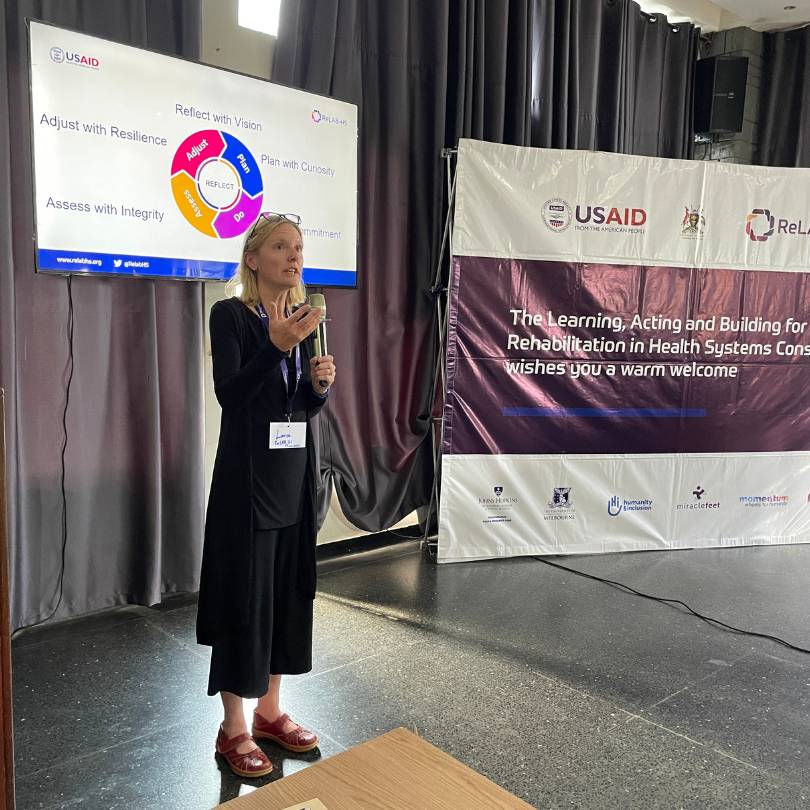
A recent workshop in Uganda took place to initiate IRETT activities in the country. The introduction of the IRETT to professional associations and training institutions marked the beginning of efforts to enhance professional regulation, academic programmes, and professional development opportunities.
In Uganda, an estimated 6.8 million individuals could benefit from rehabilitation services. However, the health system faces fragmentation, with insufficient data, weak policies, inadequate government investment, lack of prioritisation, and a scarcity of trained professionals to meet rehabilitation needs. In the recent workshop in Kampala, professional associations and training institutions gathered to discuss workforce development priorities for the country.
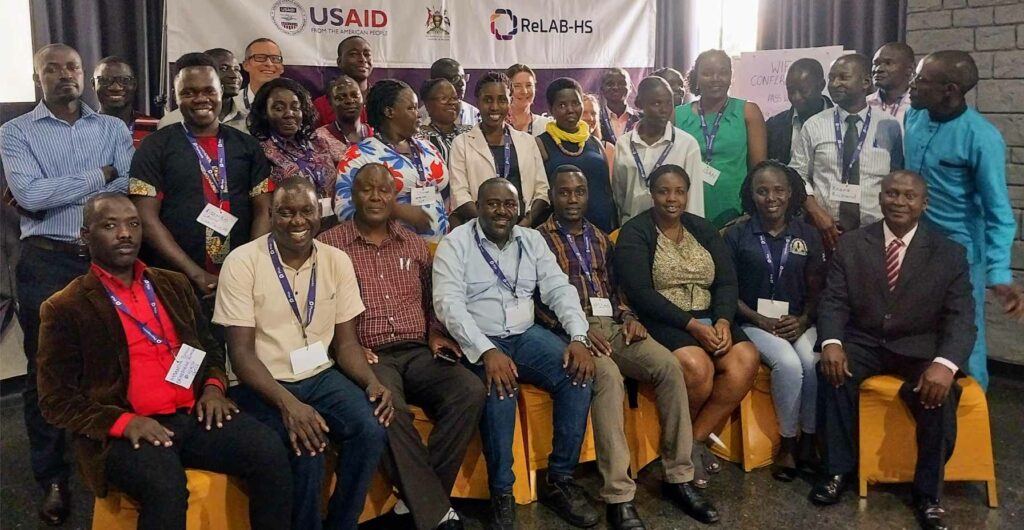
“This is the first time that the professional associations have worked together on such a significant project”
IRETT team members Rachael and Tony Lowe, Herbert Omoding and Larisa Hoffman (supported virtually by Yara Peterko and Angela Patterson) recently participated in a face-to-face meeting alongside representatives form physiotherapy, occupational therapy, prosthetic and orthotics, and speech and language therapy. This collaborative endeavour, supported by international mentors, revolved around two primary objectives. Firstly, assisting professional associations in enhancing their operational capacity to provide continuing professional development (CPD) for rehabilitation professionals as stipulated by the Allied Health Professions Council (AHPC). Secondly, supporting training institutions in aligning their rehabilitation programmes with international standards.
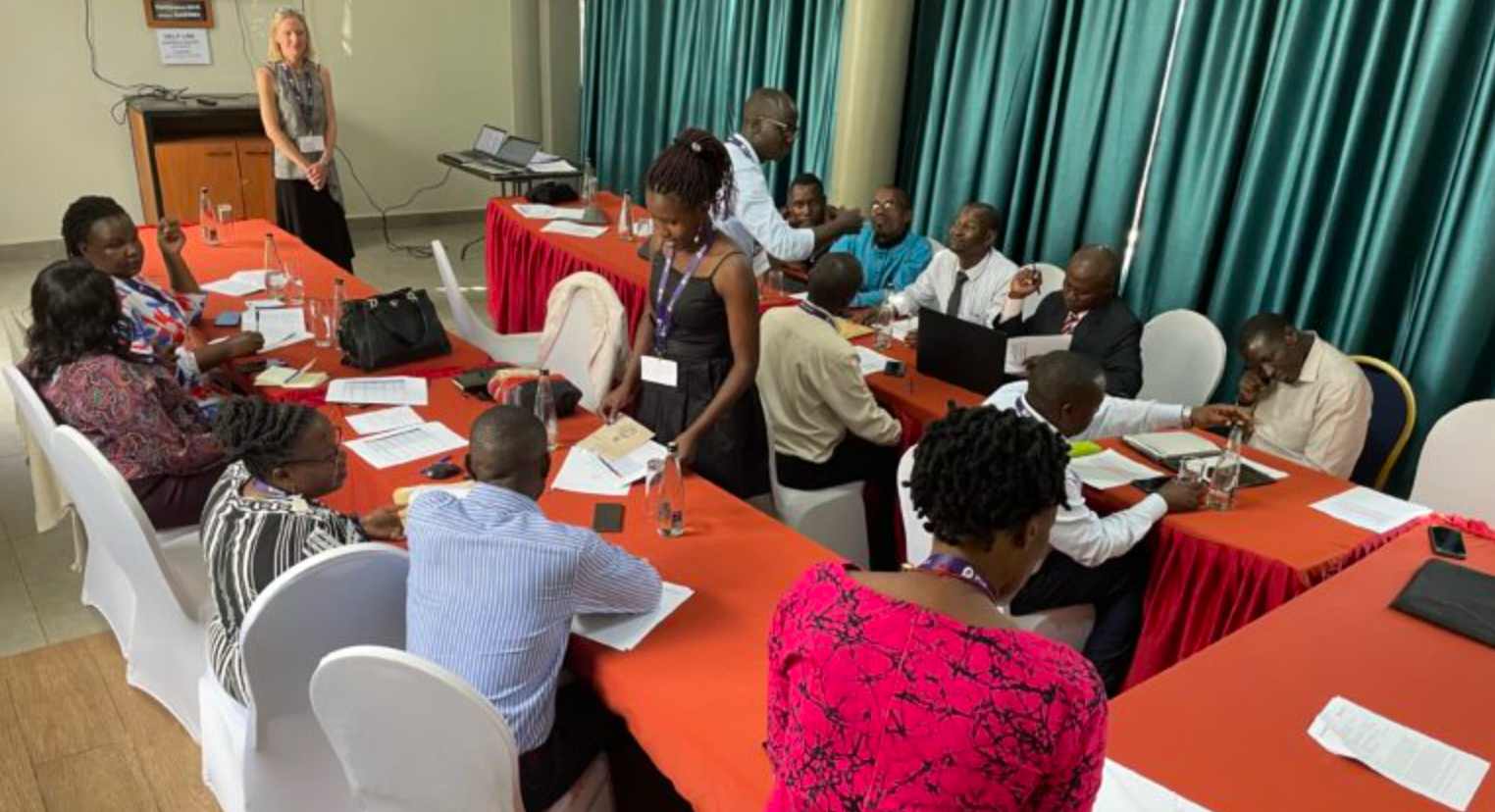
This collaboration marks a significant milestone as professional associations work together for the first time on such a substantial initiative. Discussions are underway to formalise this collaboration through the establishment of a national rehabilitation alliance to drive regulatory activities collectively. Moreover, training institutions are actively involved in enhancing academic programmes, fostering resource sharing and curriculum alignment.
Beyond strengthening formal education, the group has also committed to delivering CPD programmes for professional association members. Recognising the importance of efficiency, they plan to adopt an interprofessional approach for postgraduate CPD training, focusing initially on Stroke and Assistive Technology based on a thorough training needs assessment.