Thanks to exceptional mentorship, a highly cooperative volunteer patient, and engaged participants, the recent in-person training session held in Burma proved to be a great success, significantly enhancing participants’ practical clinical skills in managing stroke patients.
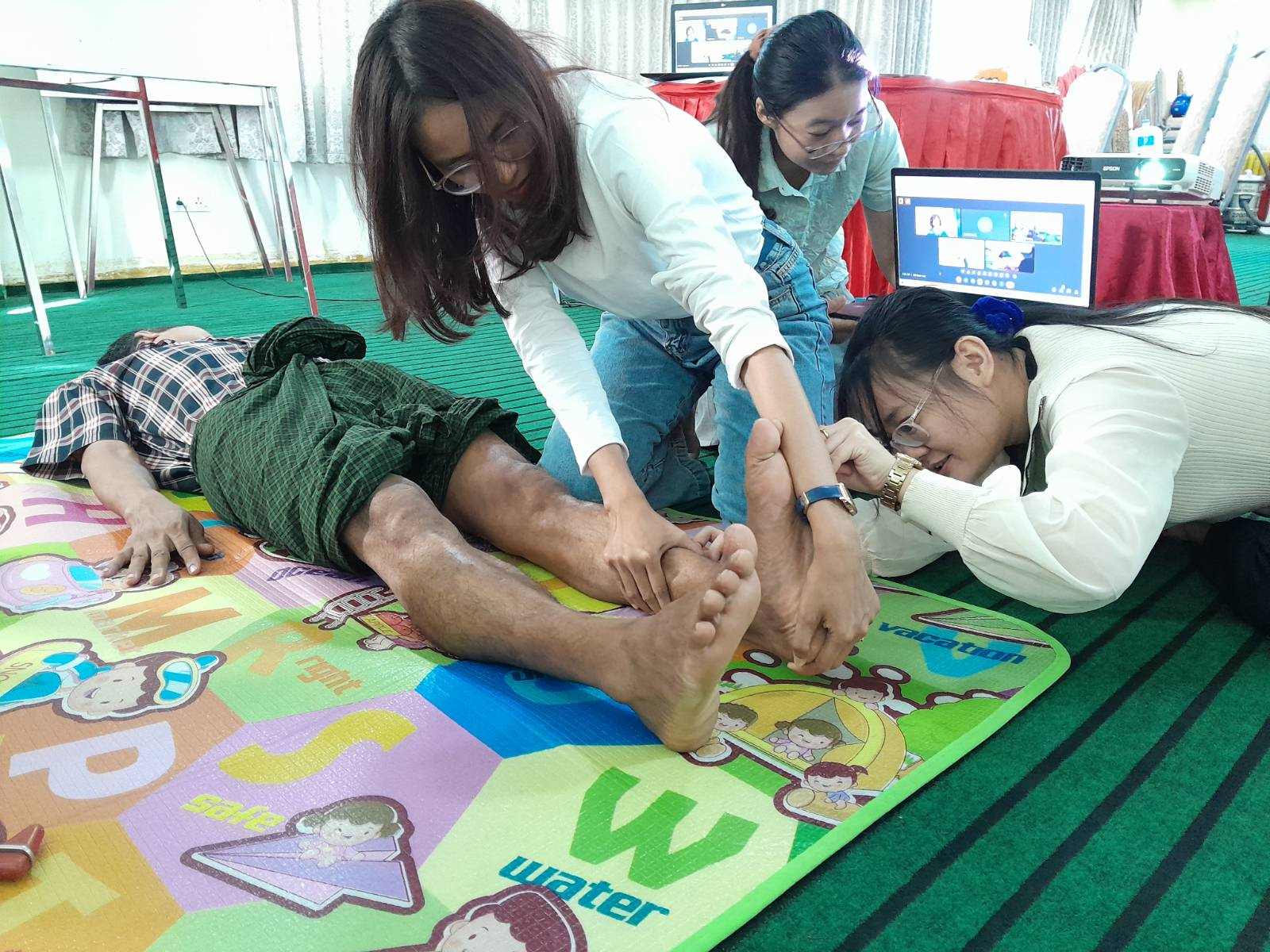
Earlier this year, when severe weather and flooding struck Hpa-an, Burma, the planned clinical skills training alongside a session in Yangon had to be postponed. However, in a rescheduled event, the team was delighted to finally convene for in-person clinical skills training on stroke for six physiotherapists based in Hpa-an. Led by local physiotherapists Thinzar Ko Ko and Nan May Hnin Su, along with Physiopedia’s Hsu Wai Mon Oo, Martina Lukin and Stacy Schiurring, who all joined via Google Meet.
This session served as a follow up to previous learning by participants through the Physiopedia Plus online Stroke Programme and online discussions within the Rehabilitation Community, enabling focused practical skill sessions on the day. The training focused on evaluation and assessment techniques, stroke-specific outcome measures based on evidence, techniques and treatment options to improve functional mobility and independence for stroke patients, and creating evidence-based, personalised treatment plans for both acute and chronic stroke cases.
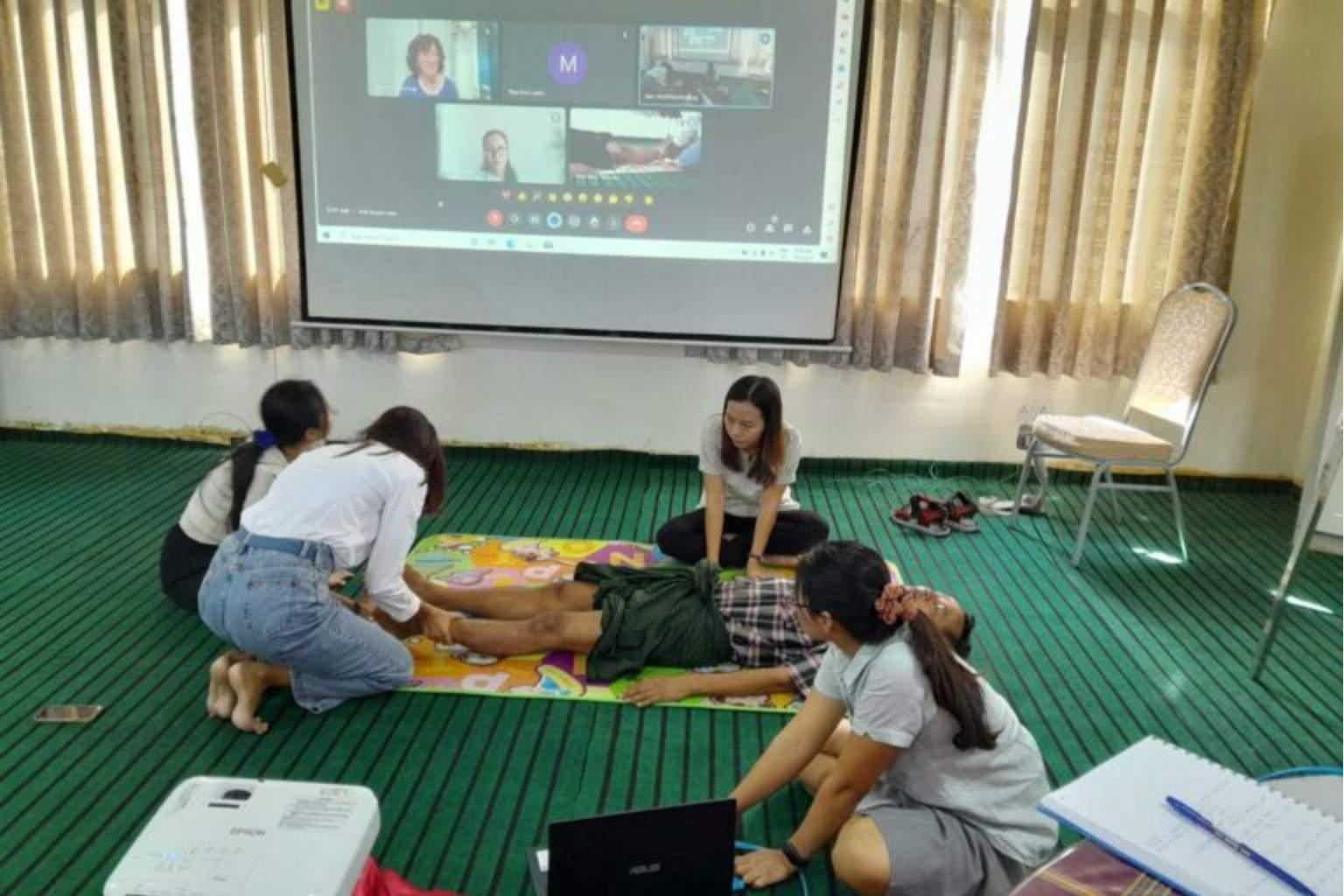
The inclusion of a volunteer patient in this face-to-face meeting added significant value, enabling participants to practice together and receive mentor-supported feedback throughout the practical session. Thanks to a meticulously planned room setup with multiple camera views, the mentor could easily observe and provide guidance.
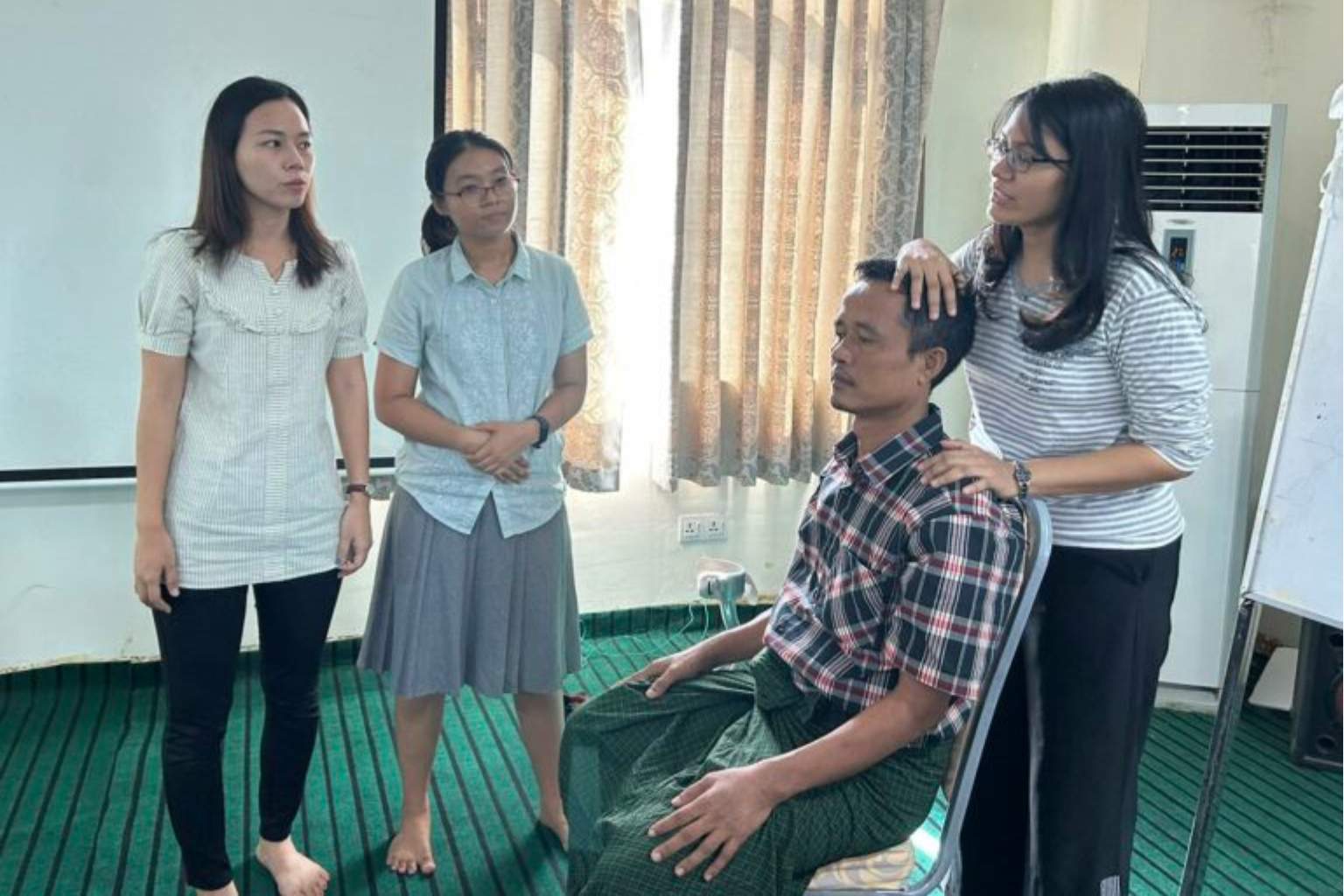
Participants expressed gratitude for the opportunity to engage in an in-person session, facilitating peer discussion and receiving feedback from the international mentor on challenges encountered in their clinical practices. The inclusion of a volunteer patient, significantly enhancing participant learning and session focus. Participants left the session with newfound confidence in gait analysis, falls prevention, upper limb assessment, and interventions directly applicable to their clinical practices, promising to enhance the care of stroke patients in Burma.