This past week saw a gathering of physiotherapists in Burma for a collaborative training session under the guidance of the international mentor, Pam Versfeld. This event was focused on enhancing the therapists’ proficiency in family-centred approaches and refining their hands-on techniques for early paediatric interventions, aimed at elevating their clinical practices.
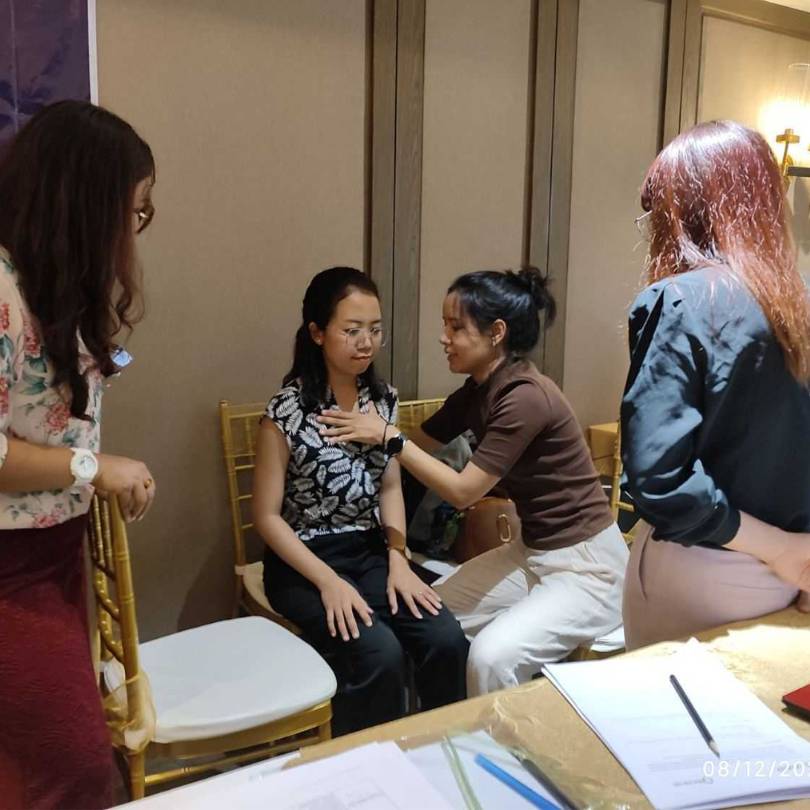
A group of thirteen physiotherapists from Burma convened across Yangon and Hpa-an for the second face-to-face training event, a segment of the ReLAB-HS Clinical Skills Development Training Programme. This assembly aimed to deepen their understanding and application of concepts introduced in the Physiopedia Plus (Plus) online course titled Family-Centred Developmental Skills Training in Early Intervention. The session, rich in practical case study exercises, was directed virtually by Pam Versfeld, a Plus instructor and international mentor, and supported on the ground by IRETT team members including Burma’s educational lead Hsu Wai Mon Oo and Martina Lukin, a specialist in workforce development and manager of the Rehabilitation Community.
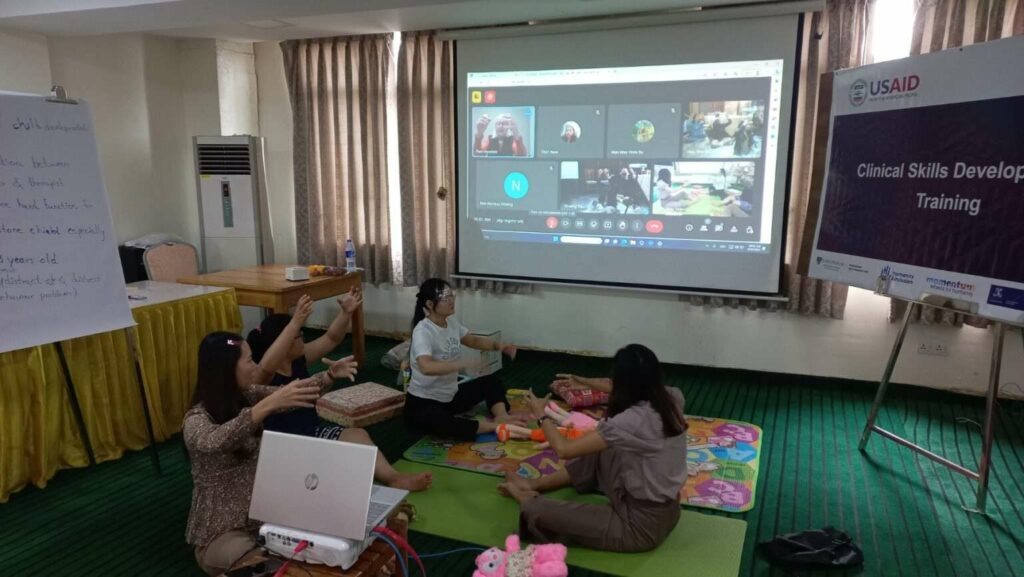
The training emphasised direct engagement with family and child-centred intervention strategies, enabling participants to refine their observational, analytical, and practical implementation skills. A key feature of the programme was the chance for therapists to present and deliberate on their paediatric cases with Pam Versfeld and fellow attendees, fostering a rich learning environment.
Participants expressed their appreciation for the training, noting it as an invaluable learning experience that introduced them to new knowledge and practical skills directly applicable to their work with children with disabilities. They extended their gratitude to their mentor, the organisers, and facilitators for the opportunity.
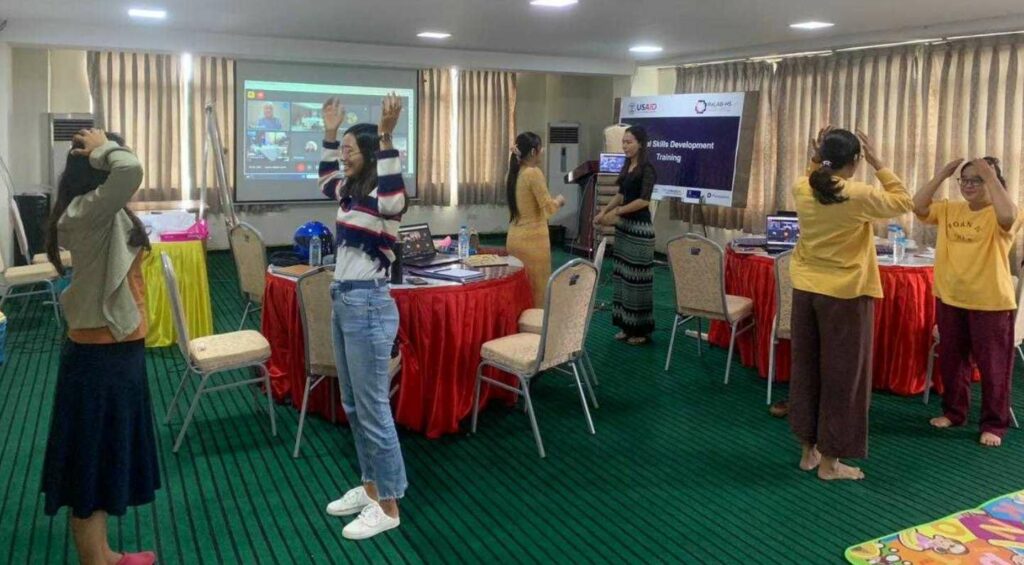
The session underscored the value of mentorship and collaborative learning, particularly in a setting where self-directed and peer-led learning are not widely practiced. With the adept guidance of their mentor and the effective session facilitation, participants were able to maximise the educational experience, leaving with enhanced skills tailored to their specific caseloads and additional written materials to further their learning and application in clinical settings.
This unique blend of learning modalities, combining online courses, interactive online forums through the Rehabilitation Community, and direct mentorship in a physical setting, presents a forward-thinking method for clinical skills training adaptable to various contexts.